Understanding Your Body: The Health Investment That Gives You More Time
Most of us know far more about the technology we use every day than we do about our own bodies.
We understand our phones, our cars, our bank accounts and probably even our coffee machines. Yet the body that carries us through every day of our lives often remains something of a mystery.
We know we’re supposed to exercise. We know sleep is important. We’re told to eat well, move more, drink enough water and spend less time sitting at a desk.
But there’s a difference between following health advice and actually understanding what’s happening inside your body.
And that understanding can change the way you think about health altogether.
You Don’t Need to Be a Doctor to Understand Your Body
Learning about anatomy doesn’t mean memorising hundreds of muscles or being able to identify every bone in the human skeleton.
It can be much simpler than that.
Understanding how your hips move, for example, can make it easier to understand why certain exercises feel the way they do. Learning how muscles, tendons and joints work together gives you a better appreciation of strength and mobility. Understanding what happens to your cardiovascular system when you run or cycle makes fitness feel less abstract.
The body also doesn’t operate as a collection of separate parts.
Your muscles, bones, nervous system, heart, lungs, digestive system and hormones are constantly interacting. What affects one system can influence another.
The more you understand those connections, the easier it becomes to see health as something bigger than weight, appearance or how many times you made it to the gym this week.
Anatomy Is Becoming Easier to Explore
For generations, learning anatomy meant textbooks filled with complicated diagrams and medical terminology.
Those resources are still valuable, but technology has made the human body considerably easier to explore.
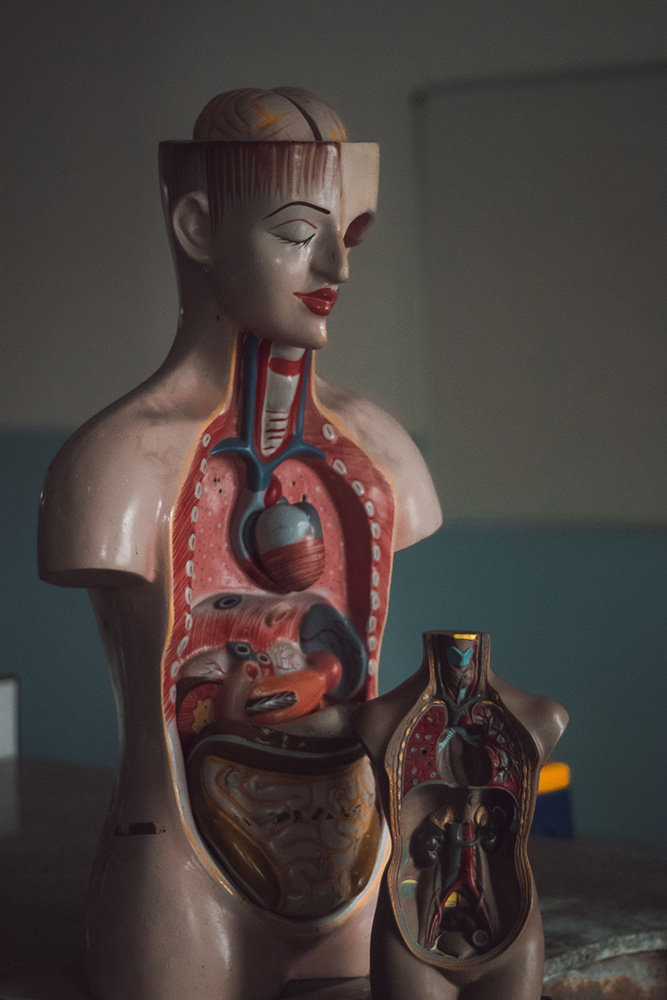
With a 3D anatomy model, you can see the body more like it actually exists.
Instead of looking at a flat drawing of a shoulder, you can understand how the joint sits within the body, how the surrounding muscles connect and how those structures move together. You can explore the spine from different angles or see where organs sit in relation to one another.
For someone who simply wants to understand their own body better, that visual perspective can make a huge difference.
Of course, exploring anatomy isn’t a substitute for seeing a doctor, physiotherapist or another qualified healthcare professional when you need one. The value is in becoming more informed and curious about the body you’re asking them to help you look after.
The Real Value of Health Is Time
We tend to talk about health in terms of outcomes.
Lose five kilograms. Run 10 kilometres. Lift a certain weight. Get your cholesterol into a particular range.
Those things can be useful markers, but there’s a much bigger reason to look after your health.
Health gives you access to your time.
Think about what you actually want from the decades ahead.
Perhaps you want to travel, hike mountains, swim in the ocean or explore cities on foot. Maybe you want to play sport, dance, carry your own luggage or simply get up from the floor easily when you’re older.
Perhaps you just want to have enough energy to say yes when something interesting comes along.
That’s where health becomes a form of wealth.
Financial wealth can give you freedom over what you do with your time. Physical health gives you the ability to actually enjoy it.
There’s little point reaching a stage of life where you finally have the time and money to explore the world if your body no longer allows you to experience it in the way you’d hoped.
Think of Health as a Long-Term Investment
There’s rarely one workout, meal or night’s sleep that transforms your health.
It’s the accumulation that matters.
Walking regularly doesn’t feel particularly remarkable on any given Tuesday. Neither does eating a good meal, getting enough sleep or spending an hour doing strength training.
But repeat those choices for five, ten or twenty years and they start to mean something very different.
Strength training can help preserve muscle and physical function as you age. Cardiovascular exercise supports your heart and circulatory system. Good nutrition provides your body with what it needs to function and recover. Sleep gives countless biological processes the opportunity to do their work.
None of these things guarantees perfect health or a longer life. Genetics, illness, accidents and circumstances beyond our control will always play a role.
But healthy habits can help stack the odds in your favour.
In that sense, looking after your body isn’t so different from investing money. The individual contributions can seem small. The real power is in what happens when they compound over time.
Become Curious About What’s Happening Inside You
You don’t need to turn health into an obsession.
Curiosity is enough.
When you exercise, ask which muscles are doing the work.
When your heart rate climbs on a run, learn what’s actually happening inside your cardiovascular system.
If you spend eight hours sitting at a desk, understand how that position affects your body and why movement throughout the day matters.
Learn what happens to muscle as you age. Learn why resistance training matters. Learn about recovery, sleep, mobility and the basic systems that keep you alive.
The more you understand, the less arbitrary healthy living begins to feel.
You’re no longer exercising simply because somebody told you exercise is good for you. You’re doing it because you understand what you’re asking your body to adapt to, and why those adaptations might matter twenty or thirty years from now.
Look After the Body That Carries You Through Life
We spend enormous amounts of time planning for the future.
We build careers. We save money. We invest. We plan holidays. We think about where we’d like to live and what we’d like our lives to look like years from now.
Our bodies deserve some of that same long-term thinking.
You don’t need perfect health, a perfect diet or an encyclopaedic knowledge of anatomy.
You simply need to pay attention.
Learn how your body works. Move it. Challenge it. Feed it well. Give it time to recover. Ask questions when something doesn’t feel right and seek professional advice when you need it.
Because the ultimate return on looking after your health isn’t a number on a scale or a photograph in the mirror.
It’s having a body that allows you to keep participating in your own life.
And when you start thinking about health that way, those healthy years ahead begin to look like a very particular kind of wealth: more time, and more freedom to decide what you do with it.







 1.Gardening. There are multiple health benefits associated with gardening. First and foremost, it gives you a chance to stay active doing something that you enjoy. What better way to get your exercise than by digging in the dirt?

 3. Hiking. Spending time in nature naturally relieves stress. This isn’t just an opinion – instead, it is backed up by countless scientific studies. Getting away from the hustle and bustle of everyday life and surrounding yourself with the beauty of nature can lower your cortisol levels, helping you let go of stress, worry, and anxiety. Hiking is a fun hobby that makes it possible to spend more time outdoors. You can make it as easy or as challenging as you want. Just look for trails that are suitable for your current level of fitness. One of the best things about hiking is that it not only lets you get outside but it also helps you get in shape, making it a healthy way to have fun.
 5. Cooking. Transforming cooking into a hobby is one of the best things that you can do for your health. Instead of thinking of it as a chore, try to view it as an opportunity for creativity. Sign up for cooking classes in your area to learn more about how to create delicious meals. Once you master the art of cooking, you can prepare food at home that is not only incredibly tasty to eat but also full of healthy vitamins and nutrients.